
Submodule 1
Introduction
Progress
0%
-
5 min
Module 2 Introduction
Social Dimension
Compassionate communication, listening, feedback, and group decision-making.
2.1. Module 2 Introduction
“What I want in my life is compassion, a flow between myself and others based on a mutual giving from the heart.”
- Marshall Rosenberg
TO COMMUNICATE FROM THE HEART is essential in building community. To do this we must strengthen our ability to relate compassionately to ourselves and others. Having empathy for ourselves is the first step. Taking personal responsibility for how we act and respond to others will come more easily if we can practice extending empathy and love to ourselves first. Listening deeply to others fosters respect, attentiveness, and empathy. Through living mindfully, and speaking from that same source with loving kindness, we generate generosity and create trust amongst people.
The ideas and practices described here are strongly related to Nonviolent Communication and also inspired by Buddhist teachers such as Thich Nhat Hanh.
A good starting point is to become aware of our feelings and learn to understand them as indicators of whether our needs are being met or not. We can then express our feelings without blaming or attacking, which will minimise the likelihood of others reacting in a defensive way. To communicate in a compassionate way, learning the art of expressing careful observations free of evaluation and judgment, flows from those beginnings.
Through learning to identify our own deeper needs and those of others, we can clearly articulate what we wish for. This means making clear requests without demanding that they be met. All human beings have the same basic needs, and this makes it possible to connect with each other and to find mutual understanding at a deep level. We discover the beauty of our own compassion by focusing on what is being observed, felt and needed, rather than on diagnosing and judging. This is the key to creating a flow between ourselves and others, based on a mutual giving from the heart.
Once we become able to receive critical and hostile messages without taking them personally, giving in, responding defensively out of hurt feelings, or losing self-esteem, we know we’re on the right track.
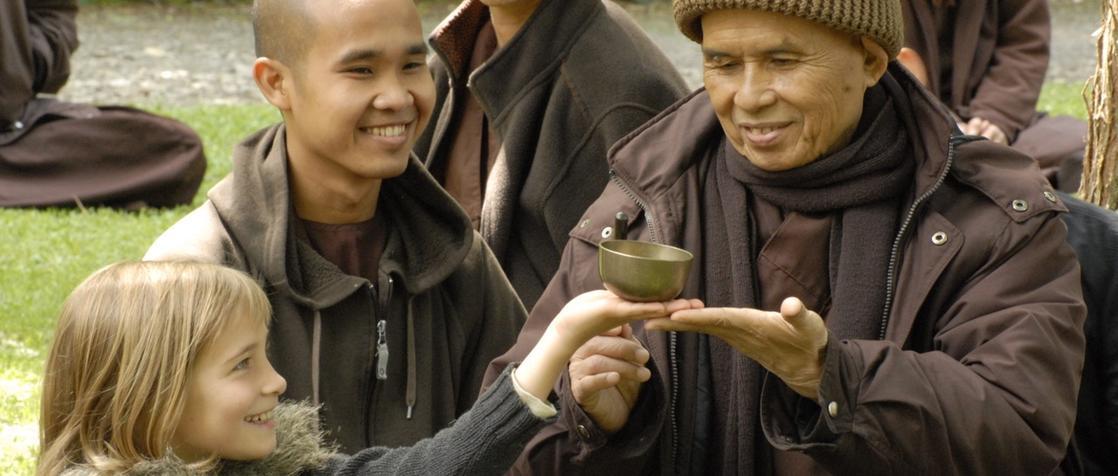
Thich Nhat Hanh. Source:Plum Village
Buddhist monkThich Nhat Hanh was very active in the peace movement, sponsoring retreats for Israelis and Palestinians, encouraging them to listen and learn about each other. He has given speeches urging warring countries to stop fighting and look for nonviolent solutions to problems, and has written several books about meditation, mindfulness and peace.
Preview
The full outline is below. Register for the Social Dimension to unlock every lesson.
Submodule 1
Progress
0%
Module 2 Introduction
Submodule 2
Progress
0%
Compassionate Communication
Taking Responsibility for Our Feelings
Bring it to life
AssignmentSubmodule 3
Progress
0%
Listening and Feedback
Giving and Receiving Feedback
Bring it to life
AssignmentSubmodule 4
Progress
0%
Governance
Behavioural Ground Rules for Effective Groups
Participatory Democracy
Government and Governance
Decision Making
Decision Making: Consensus
Decision Making: Sociocracy and Holacracy
Bring it to life
AssignmentDecisions in a Complex World